

When a town centre is struggling, the first instinct is usually to look at what is missing.
The shops are empty, footfall is falling, investment is difficult, the public realm needs attention and perhaps there is already a masterplan, but progress feels painfully slow. So, we start talking about what needs to be built.
That is understandable. Buildings are tangible, investment can be measured, a new development has a value that can be put into a spreadsheet and a masterplan can be drawn, costed and presented.
But what if one of the greatest assets a town centre already has is not a building at all?
What if it is the people?
I have become increasingly interested in what happens when we stop looking at town centres simply through the lens of property and start looking at the people, skills, relationships, businesses and organisations already there.
It sounds simple, but it can fundamentally change how we rethink regeneration.
Before deciding what a town needs, perhaps we should spend more time understanding what it already has.
Every town centre has people with a stake in its future, although that stake is not always immediately visible. They might run a business, own property, work there or live locally. Others may travel into the town every day and spend much of their working or social life there. They may bring experience from health, education, transport, leisure, culture or the voluntary and community sector. Others simply know the place, its history, strengths, frustrations and potential, often better than anyone writing a regeneration strategy from outside.
The problem is that we do not always bring those people together and until we put out a genuine call to action, we do not know who wants to help.
A town centre is more than its postcode
We cannot underestimate the relationship people have with their town centre.
People do not necessarily always identify most strongly with the street they live on but their connection may be with a town centre, not necessarily the one they live in. They may have just visited, worked in a town for 20 years, sent their children to school there, used its health services, met friends there, gone to the gym or simply come to regard it as “their town”.
Their connection can be emotional, social, economic or practical, rather than simply residential.
That means the community of a town centre is much bigger than the people living within a boundary drawn on a map.
The same applies to the organisations and businesses that operate there. A health service can bring thousands of people into a town. A college can contribute young people, skills and energy. Transport determines how accessible the centre is, while leisure, culture and hospitality give people reasons to visit beyond shopping.
These are all part of the town centre ecosystem, yet regeneration conversations can still become dominated by property.
The health of a town centre is partly about what is built there, but it is equally about what happens there and the people who make that happen.
Affluence does not guarantee success
“People are not simply choosing where to spend their money. They are choosing where to spend their time.”
Sonia Cubrilo
There is a perception that regeneration is easier in affluent areas. It is tempting to think that if people have more money to spend, a town centre should naturally prosper.
But people are more mobile than ever. They can shop online, travel to another centre, eat somewhere else, work differently and choose where they spend their leisure time.
They vote with their feet and their money.
An affluent catchment therefore does not guarantee a successful town centre. What makes people choose one place over another is often about much more than household income. It is about experience, identity, convenience, social connection, culture, independent businesses, food, leisure, events and whether a place feels alive.
People are not simply choosing where to spend their money. They are choosing where to spend their time.
That is why the character of, and relationships with, a place matter so much more.
Never write off a deprived community
“The lesson is worth remembering: regeneration begins with people who care.”
Sonia Cubrilo
If affluence does not automatically make regeneration easy, the opposite is also true.
I remember a particularly telling moment during a workshop I was facilitating for a town centre in a challenged area of the North West. A Director of Regeneration said to me, “You just don’t understand. People in this area haven’t got time to get involved with their town centre because they are struggling with the cost of living.”
I understood the point, but my response then, and to others who have made a similar assumption since, is this: you simply cannot know the depth of talent and potential within a community until you take the time to look.
People may be dealing with significant pressures, but that does not mean they lack skills, ideas, ambition, experience or a passion for their community. In fact, some of the people who understand a place best and care most deeply about its future, can be found in the very communities that are too often described only through their challenges.
The question is not whether everyone has the time or capacity to get involved. They won’t. The question is whether we create the opportunity for those who do want to contribute to be heard, connected and supported.
Anyone who believes that a town centre in a deprived community cannot be transformed is selling that community short.
A community can face deep and complex challenges while also being rich in talent, knowledge, ambition, creativity and determination. The two can exist at the same time.
That is where an asset-based approach becomes so important: recognising the strengths within a place and creating the conditions for them to work together.
Stretford is an interesting example of what can happen when a town begins to change the narrative around itself and, importantly, starts to believe in its own potential. Its transformation has not simply been about physical investment; it has been about creating a different sense of what the town centre could become and building on the people, businesses, community assets and activity already there. Stretford Public Hall, now community managed, has played an important role as a catalyst for this change, demonstrating how a locally rooted asset can help bring people together, create activity and build confidence in the wider town centre.
The lesson is worth remembering: regeneration begins with people who care.
Altrincham: from a masterplan to a partnership
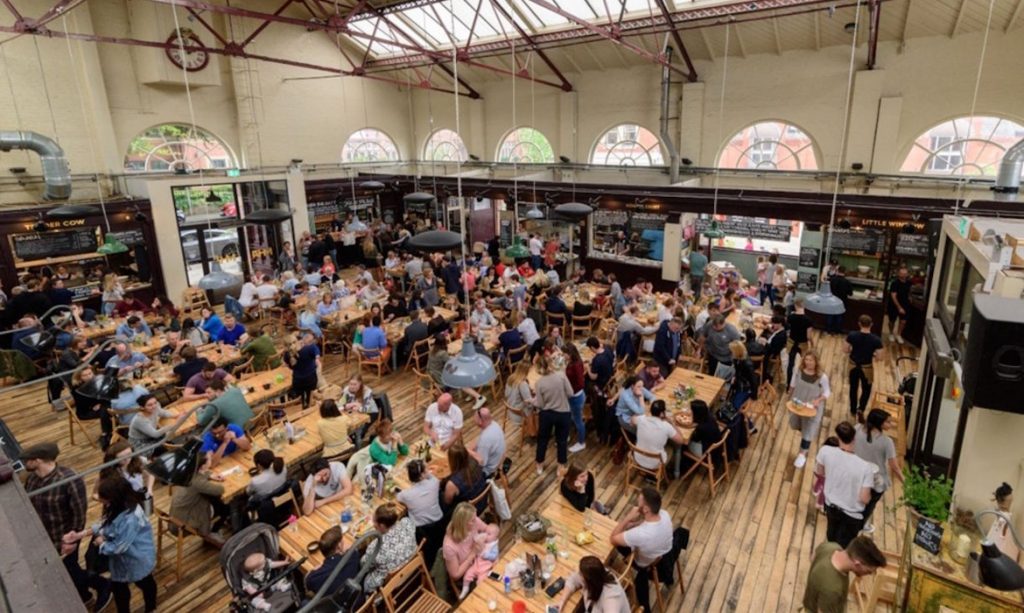
This is where Altrincham provides such a powerful lesson.
In 2010, the town was in real trouble. Around 30% of its town centre retail space was vacant, much of it in private ownership and it had become nationally associated with the decline of the high street. Yet Altrincham was not without ideas or plans. There had already been masterplanning and a vision for its future.
The difficulty was that a masterplan, however good, can only take you so far.
It can set out what should happen to buildings, streets, public realm, transport and development, but it cannot make people care about the outcome. It cannot persuade a landlord to think differently, give a struggling business confidence, create the commitment of a volunteer or build trust between people who have never previously worked together.
What was needed was a sense of shared ownership, a belief that the future of Altrincham was something that different people could coalesce together around, take collective responsibility for and, in doing so, demonstrate genuine place leadership.
That is where Altrincham Forward became so important. An organic partnership emerged around the town, bringing together people with different interests but a common stake in its future.
Businesses needed customers and footfall. Landlords needed successful businesses and occupied properties. The community needed activity and reasons to use the town. The council needed the town to thrive. Health and education brought people into the centre, while transport connected them and leisure, hospitality and culture gave them reasons to stay.
None of these things could transform Altrincham on their own. Together, however, they created an ecosystem in which change could take hold.
For me, that is one of the most important lessons from Altrincham. The town did not suddenly discover one big answer to all its problems. It began connecting and delivering a series of smaller activities and interventions, each contributing in its own way. These, individually, may have seemed modest, but collectively they created something much more powerful.
The whole became greater than the sum of its parts.
The physical investment that followed mattered enormously. So did the market, public realm, transport, healthcare, businesses and wider investment. However, underneath those visible changes was something less tangible and arguably just as important and that is that people began working together with a shared belief that they could change the fortunes of their town.
Liscard: proving the approach is not just for affluent places
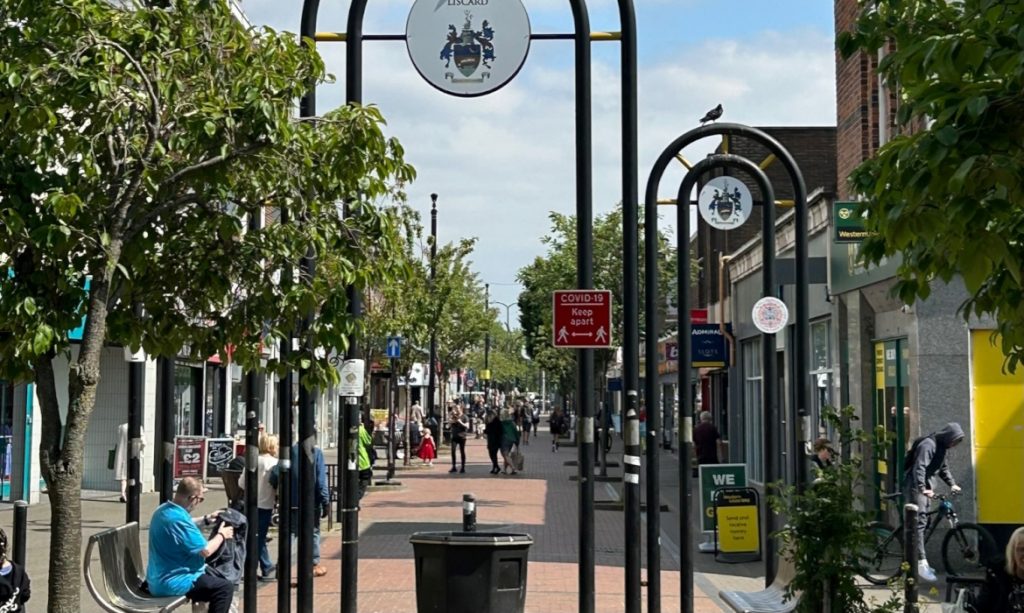
Liscard offers another important lesson because it challenges the idea that an asset-based approach is something that only works in more affluent places.
Liscard sits within the more deprived eastern part of Wirral and, like many town centres facing long-standing economic and social pressures, has had to deal with declining retail, vacant premises and changing patterns of use. Yet its story is also one of potential.
The development of Liscard Together (Town Partnership) brought people together around a shared purpose and created a different way of thinking about the town’s future. The important point is not simply the creation of another partnership. It is the recognition that Liscard’s future cannot rest on a masterplan or major capital project alone.
A physical vision can show you where you want to go, however, people can create the momentum to get there.
The real opportunity comes when people recognise not only what they want someone else to provide, but what they themselves can contribute, whether that is knowledge, skills, relationships, ideas, time, property or simply the enthusiasm to get something moving.
Sometimes enthusiasm is the asset that starts everything else.
How should we measure regeneration?
This brings us to a wider question about how we value regeneration.
We are very comfortable measuring the things that are easy to put a price on. We can calculate investment, property values, jobs, homes, business rates and development completed.
These measures matter, but they only tell part of the story.
We are much less good at measuring the value created when people work together.
What is the value of landlords collaborating to tackle vacancy? What is the value of businesses creating activity that brings people back into a town? What happens when education, health, community organisations and businesses connect their work and create opportunities that none could have created alone?
And perhaps most difficult of all, how do we measure confidence?
Confidence can determine whether a business stays or leaves, whether a landlord invests or holds back, whether an investor takes an interest and whether people choose to spend their time locally. These things rarely appear properly in a conventional regeneration business case, yet they can have a profound economic and social impact.
This is why I believe there is an opportunity to develop an asset-based model for measuring town centre value, one that looks not only at what has been invested in a place, but at the value unlocked by connecting its people, skills, businesses, buildings and organisations.
Perhaps the greatest asset in a struggling town centre is not something that needs to be bought or built. It is something that needs to be unlocked.
A different way of thinking about funding
This also has implications for government and future regeneration funding.
The direction of travel is encouraging, with increasing recognition of the importance of community involvement and partnership in high street renewal. However, as the next generation of funding is considered, there is an opportunity to go further.
My plea to the Prime Minister, Andy Burnham and the government at every level is to think beyond funding the physical transformation of towns and consider how funding can help build the ecosystem around that investment.
If town centres really are at the heart of our communities and local economies, then funding should not only pay for what gets built but it should also help towns develop the capacity, relationships and partnerships that allow people to work together and make a difference.
Greater Manchester’s approach to growth already points towards a more joined-up way of thinking, connecting investment with town centres, communities, businesses and wider economic development. The opportunity is to take that principle further and develop a model that recognises the collective capacity of the people who make a place work.
Perhaps we also need to rethink how we define success.
Alongside investment, property values, jobs and development, we could measure the strength of the town-centre ecosystem: the relationships created, businesses supported, vacant properties brought back into use, skills developed, volunteering generated, social value created, confidence built and additional investment unlocked because people started to believe in the place again.
That would give us a much richer picture of regeneration.
The question we should be asking
“The people who can transform a town centre may already be there. They may simply have never been asked.”
Sonia Cubrilo
So perhaps the next time we look at a struggling town centre, we should resist the instinct to start with what is missing but instead, ask who is already there.
Look at who has a stake? Who has knowledge, skills, ideas or influence? Who has a relationship with the place? Who has the energy to get involved? And, more importantly, who cares enough to want to help change it? Then ask the question that can change the whole approach:
What could we achieve if we brought those people together?
This is not an argument against masterplans or major regeneration projects. Town centres need investment, good design, infrastructure and development and we should not confuse the physical plan with regeneration itself.
From my experience of working with towns that are successfully transforming their places, I have seen that the plan can provide the route map, but it is people who create the movement. That is why the experiences of Altrincham, Liscard, Stretford and many other places are so relevant. They demonstrate that successful regeneration does not have to begin with perfect conditions, an affluent population or a major capital project; it can begin by recognising the potential that already exists within a place and bringing people together to turn that potential into action.
Sometimes it begins with just a conversation or sometimes it begins when a council, business, community group or individual says: We want to change this place. Who wants to help?
You might be surprised by the answer.
The people who can transform a town centre may already be there. They may simply have never been asked.
In conclusion
In my view, perhaps the real opportunity for the next generation of town centre regeneration is not simply to build better places, but to unlock the people, relationships and assets that can make those places thrive.